viable eye dahlia tuber
How to Spot a viable eye dahlia tuber Before You Buy
A viable eye dahlia tuber is what determines if your plant will grow. Learn how to identify dahlia eyes and avoid buying weak or non-viable tubers.
Published 4/19/2026
Share this post
Help more growers, small farms, and dahlia collectors find it.

If you want a dahlia to actually grow, everything comes down to the viable eye dahlia tuber. Without a viable eye, the tuber will not sprout, no matter how large or healthy it looks. That is why experienced buyers focus less on size or shape and more on knowing exactly where the eye is and whether it is alive.
What a viable eye actually is
Before anything else, it helps to answer the basic question: what is a viable eye on a dahlia tuber.
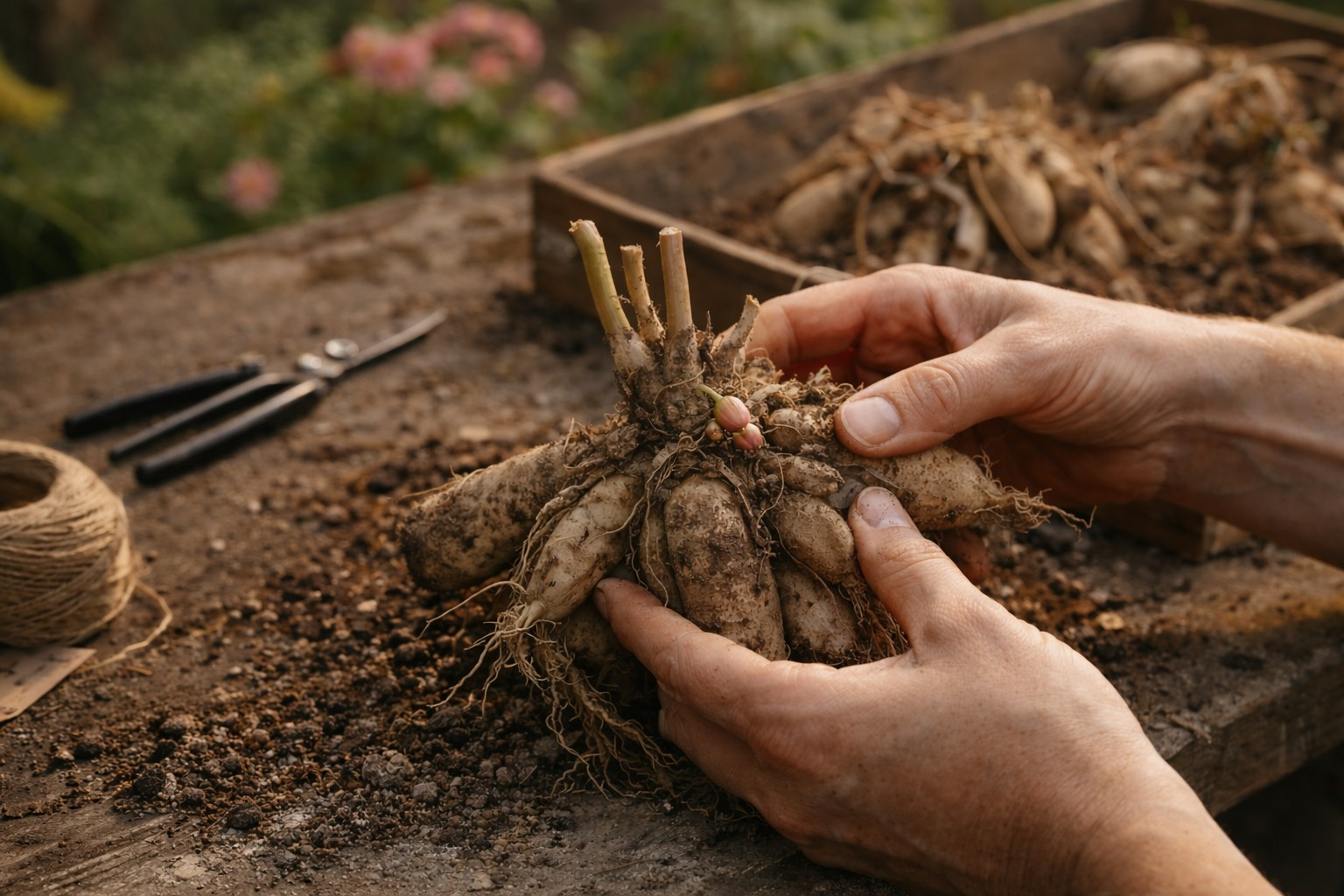
A viable eye is the growth point where the new stem will emerge. It forms at the crown, where the tuber connects to the main plant stem. This is not random. It is a very specific area, and if that part is damaged or missing, the tuber cannot produce a plant.
A lot of confusion comes from thinking the whole tuber can sprout. It cannot. The body of the tuber stores energy, but only the eye can turn that stored energy into growth.
A healthy viable eye usually looks like:
- a small raised bump or swelling at the crown
- sometimes slightly lighter or greener than surrounding tissue
- occasionally already starting to push a tiny sprout if the season is advanced
Once you see a few, you start recognizing them quickly.
Why buyers get this wrong
Even careful buyers make mistakes with tuber inspection, especially early on.
Mistaking size for quality
A large tuber without an eye is useless. A small tuber with a clear eye can grow into a full plant. This is one of the most common misunderstandings in dahlia buying.
Assuming all tubers in a clump are viable
Not every piece in a clump has a viable eye. Some divisions are just storage tissue. That is why experienced growers divide carefully and why buyers should understand what they are actually receiving.
If you are unsure about this, it helps to read Single tuber vs clump: what you are actually buying.
Buying from unclear listings
A listing that never mentions eyes, crown, or condition is a signal. It does not automatically mean the tubers are bad, but it does mean the seller is not helping you evaluate dahlia tuber quality.
How to identify dahlia eyes step by step
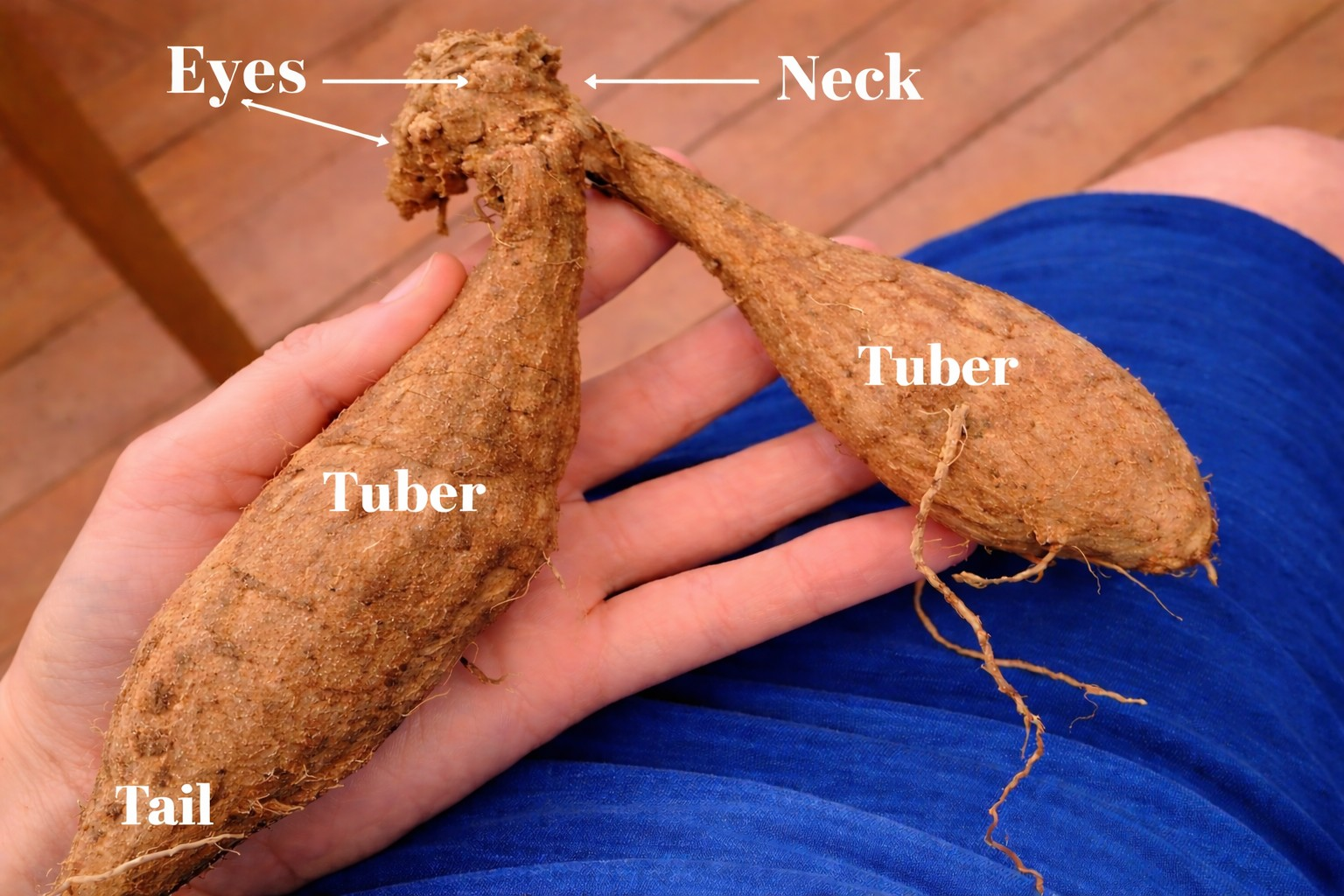
If you are learning how to identify dahlia eyes, use a simple inspection routine. This works whether you are buying in person or reviewing listing photos.
1. Find the crown first
The eye is always near the crown, where the tuber meets the old stem. If you cannot locate that area, you cannot confirm a viable eye.
Look for the rougher, slightly woody part of the tuber. That is your reference point.
2. Look for a bump, not a crack
A viable eye is usually a small bump or swelling. It is not a random split in the skin. Cracks can happen during storage and do not indicate growth.
3. Check firmness around the eye
The tissue around the eye should feel firm, not mushy or dried out. A damaged crown often means the eye will not develop properly.
4. Notice early sprouts in late season
As spring approaches, some tubers will already show tiny shoots. This makes identification easier, but you should still be able to recognize the eye even before sprouting.
5. Compare more than one example
If you are unsure, compare several listings or photos. On a marketplace, you can Browse varieties and see how different growers present their tubers. Patterns become clearer quickly.

Seasonal timing matters more than most people think
A viable eye dahlia tuber does not always look the same year-round. Timing changes what you see.
Late winter to early spring
This is when buyers are actively shopping. Eyes may still be small and subtle. You need to look closely at the crown.
Mid spring
Eyes begin to swell and sometimes sprout. Identification becomes easier. This is often when newer buyers start feeling more confident.
After planting season begins
At this point, many of the best listings are already gone. Waiting for obvious sprouts can mean missing the strongest inventory.
That is why experienced buyers learn to spot eyes early rather than waiting for visible growth.
A quick real-world scenario
Imagine two listings for the same variety.
The first shows a clean single tuber with a clearly visible eye at the crown, described calmly with notes about timing and storage.
The second shows a large clump with no clear mention of eyes, just a bloom photo and a short caption.
Both may look appealing at first glance, but the first listing gives you real information about viability. The second leaves you guessing.
That difference is what separates a confident purchase from a gamble.
How marketplaces help you evaluate quality faster
A good marketplace does not replace your judgment, but it makes it easier to apply it.
On The Dahlia Hub, buyers can:
- compare multiple listings for the same variety
- check how different growers describe their stock
- look for consistent language around eyes, condition, and timing
- move between growers using Meet growers instead of relying on a single listing
That structure helps you evaluate dahlia tuber quality without chasing scattered posts or incomplete information.
If you are actively buying this season, it is worth registering early. Register free to compare listings, track availability, and choose tubers with real confidence instead of rushing at the last minute.
Common mistakes to avoid this season
Even experienced buyers slip into these habits under pressure.
Waiting for perfect photos
A listing does not need to be visually perfect to be trustworthy. In fact, overly polished photos sometimes hide the details you actually need to see.
Ignoring the crown entirely
If you do not see the crown, you cannot confirm the eye. It is that simple.
Assuming all sellers describe eyes the same way
Some growers are very explicit. Others are more subtle. Learning the visual cues yourself is the safest approach.
Buying too late in the cycle
The longer you wait, the fewer strong listings remain. The goal is not just to buy a tuber. It is to buy a good one.
FAQ
What is a viable eye on a dahlia tuber?
What is a viable eye on a dahlia tuber comes down to the growth point at the crown that produces the new plant. Without it, the tuber will not sprout.
How to identify dahlia eyes if I am new?
If you are learning how to identify dahlia eyes, start by locating the crown and looking for a small bump or swelling. With a few examples, the pattern becomes easy to recognize.
Can a dahlia tuber grow without an eye?
No. A tuber without a viable eye cannot produce a plant, even if it looks large or healthy.
Does tuber size affect dahlia tuber quality?
Size alone does not define dahlia tuber quality. A smaller tuber with a viable eye is far better than a large one without a growth point.
If you remember one thing this season, make it this: the viable eye dahlia tuber is what determines whether your plant will grow. Everything else is secondary.
If you want to compare listings more clearly and avoid guessing, Register free on The Dahlia Hub. It gives you a better way to browse, compare growers, and choose tubers that are actually ready to grow.
Helpful Dahlia Hub Links
- Open your store: Primary seller acquisition path.
Share this post
Help more growers, small farms, and dahlia collectors find it.
Community comments
Growers and buyers can add to the conversation
Questions, practical follow-ups, and firsthand experience are welcome here.
0 comments
Join the conversation
You need an account to comment so we can keep the discussion useful and accountable.